
Script consultancy · Karel Segers
Your script,
diagnosed.
One reader, one written report, and a ranked list of fixes. Twenty years of reading professionally, and a taste including yours.
You already know something is wrong.
- Readers say they like it; and pass anyway.
- The second act is thirty pages of waiting.
- You cannot say what it is about in one sentence.
- Draft seven feels further away than draft three.
Whichever one it is, the diagnosis starts in the same place, and that part is free.
Services
Three depths, one reader.
From a first read to a full diagnosis across drafts. Every fee is a ceiling; send your work for a tighter quote.
Selected credits
Films Karel consulted on.
Twenty years reading for festivals, funds and producers.
More about Karel →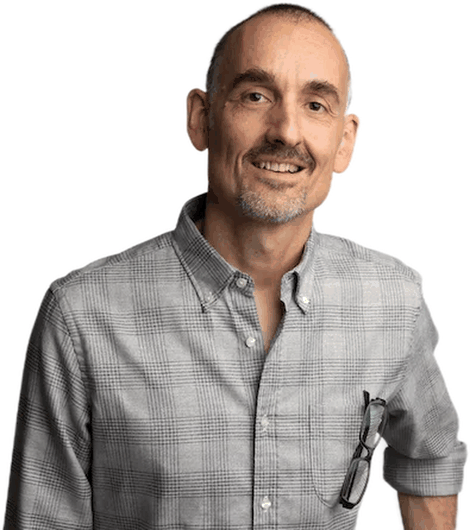


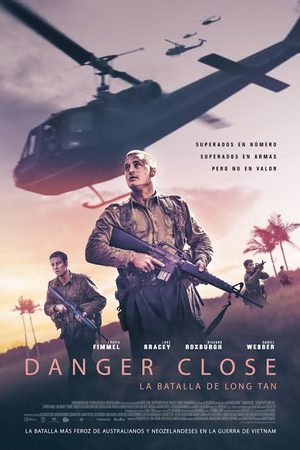
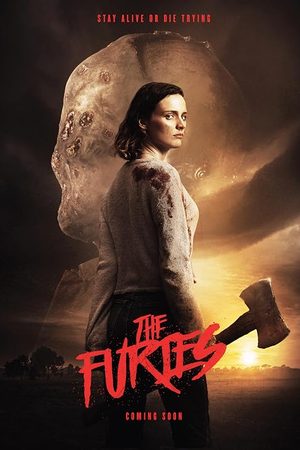

“He just might be the most underrated story analyst in the world today. … my first feature film would never have been made.”
“Karel has the unique ability to present complex ideas in a simple and engaging way.”
“A fairer statement would be that I have a writing career BECAUSE of Karel.”
How it works · what you receive
Send it, and get back something you can work from.
The report opens with the priorities, ranked in the order they should be fixed. Line-level detail comes last, because most of it changes again in the next draft anyway.
Deliverable 01
LoglineOne sentence that includes: protagonist, want, obstacle, cost.
Free with every serviceDeliverable 02
Step outlineYour script cut down to one line per scene, so the shape is clear.
Free with every serviceDeliverable 03
Structural notesPremise, act turns, want and need; plus your priorities, ranked.
Script Notes and aboveDeliverable 04
Scene notesScene by scene: what each one costs, earns, and could lose.
Script Notes and aboveThe first two are always included. Karel writes a logline and a step outline for your script whatever you book. If you send your own versions as well, you get his notes on those too, at no extra cost.
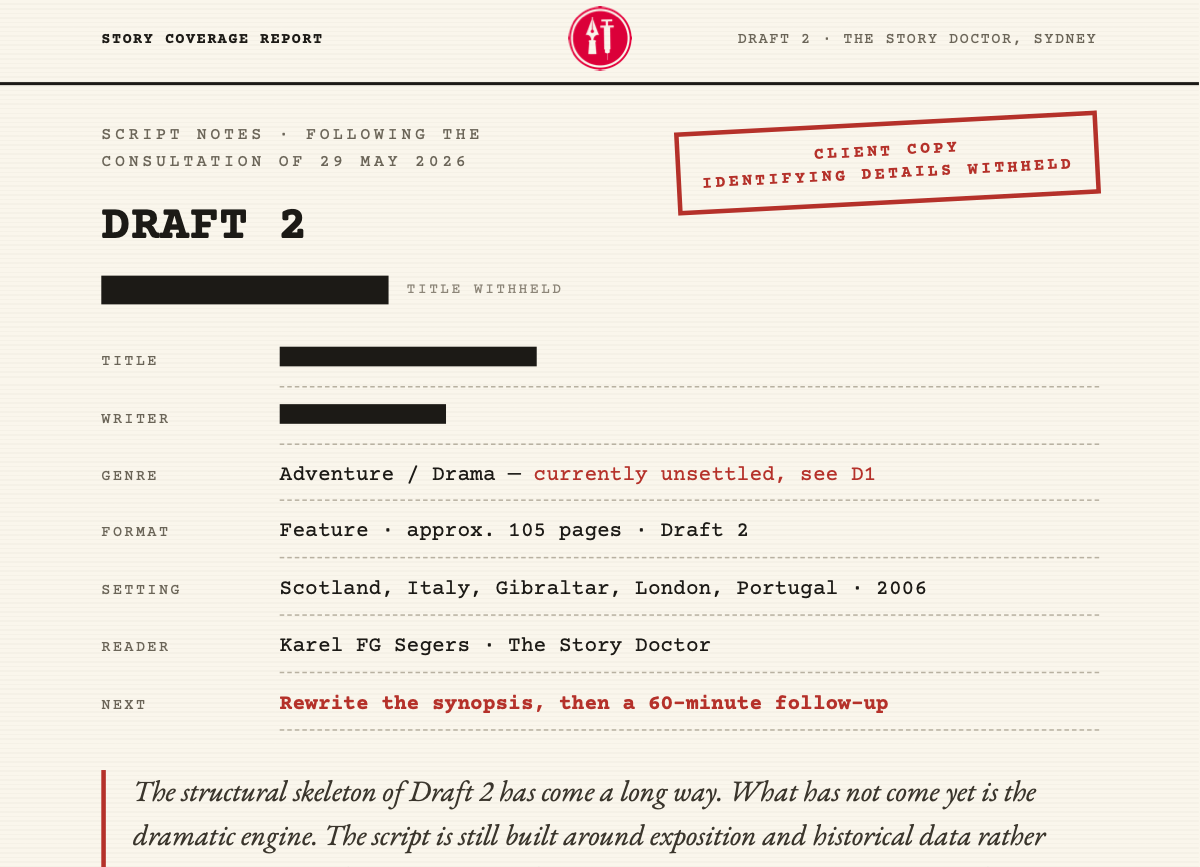
From a real report
The cover block — title and writer withheld
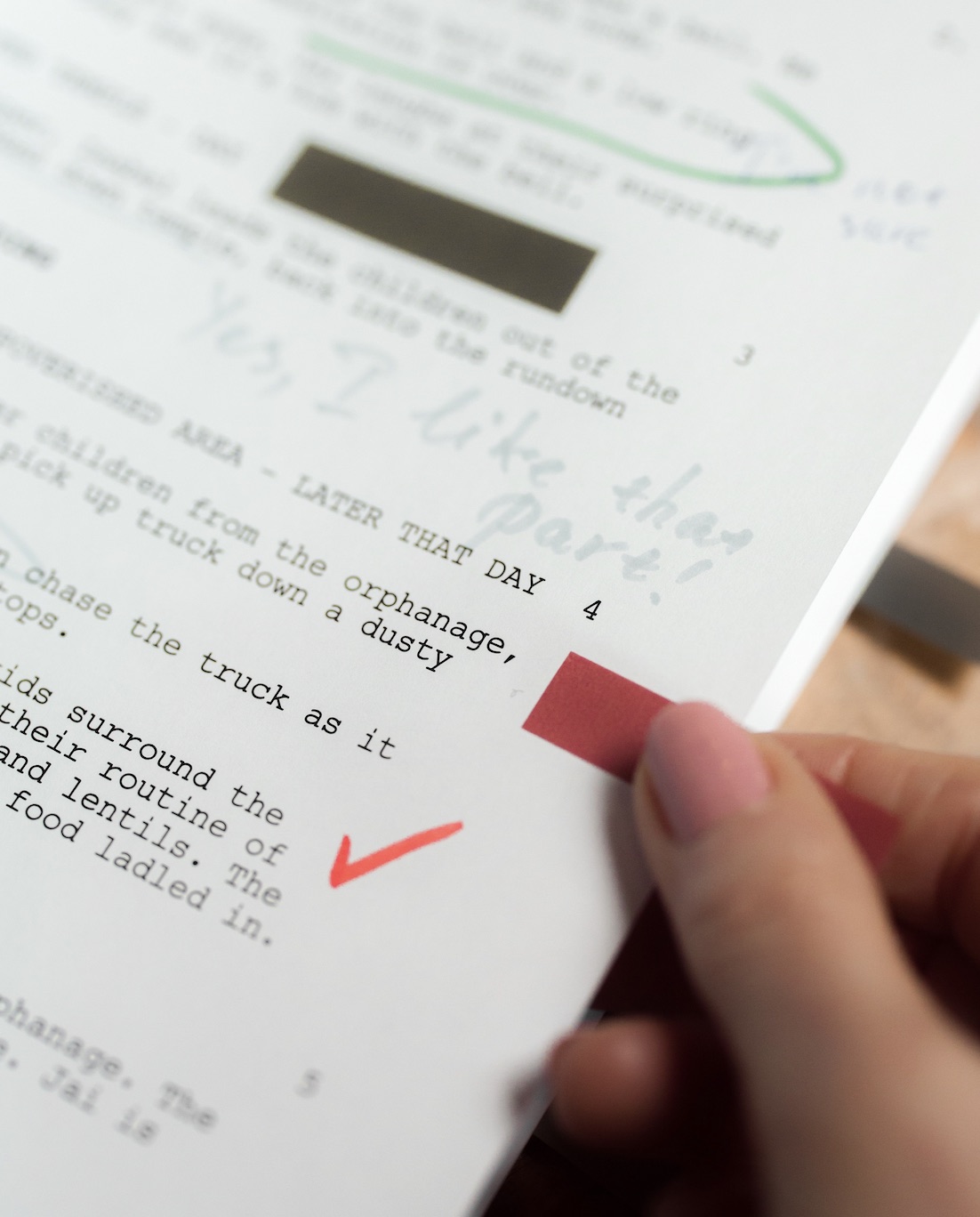
Every report opens the same way: what was read, when it was read, and the one thing to do next. On this copy the title and the writer’s name are the only details blacked out.
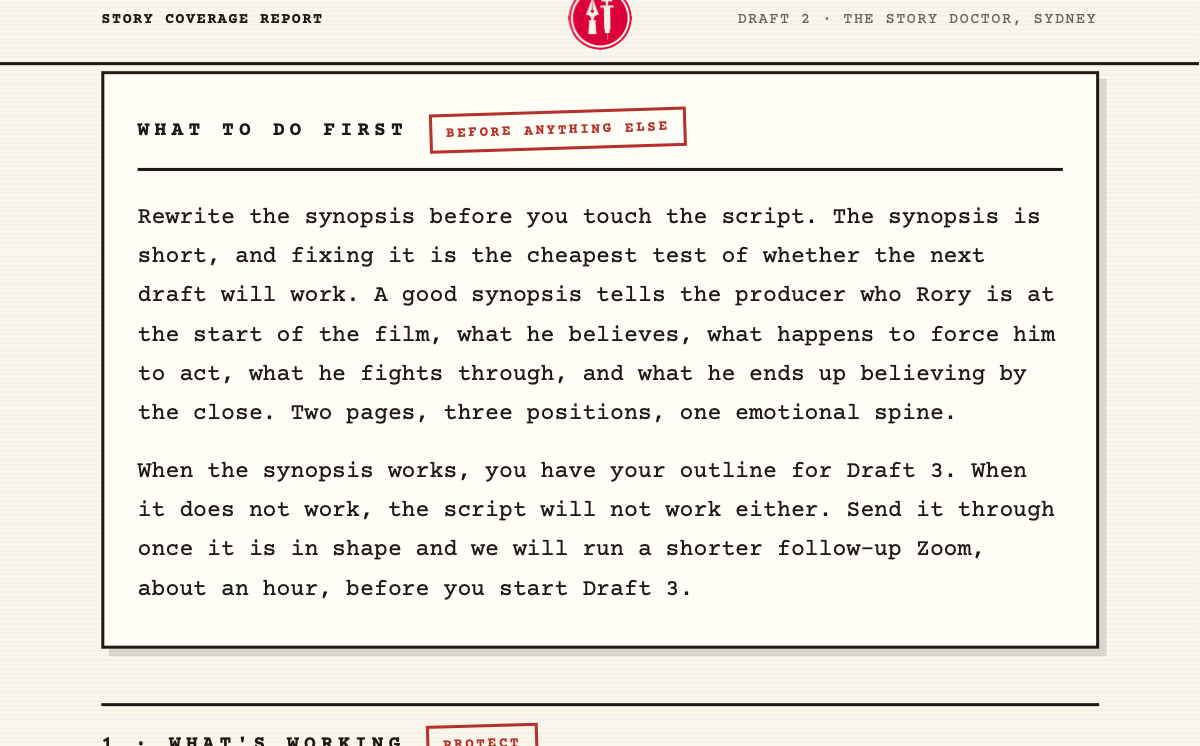
From a real report
Page 2 — the one job that comes before the rest
The first thing in the document is the single job that comes before everything else. Nothing further in the report matters until it is done.
Start free · before you book
Two documents, whatever service you choose.
A logline and a one-page synopsis. They are the part of the diagnosis you can do yourself, and they cost nothing. If a story will not survive one sentence and one page, the notes will only tell you that more expensively. Read the guide.
Document one
The loglineOne sentence: who wants what, what stands in the way, and what it costs.
Document two
The one-page synopsisThe whole story on one page, ending included. A synopsis that hides the ending cannot be diagnosed.
The generator is having a moment off. The two documents below are the part that matters anyway — write the sentence yourself, and bring it with your script.
The tool · on your own draft
A step outline of your script, in a few minutes.
Upload the screenplay and get back the structural x-ray: one step for every slugline, the acts and sequences marked, and the page each beat falls on. It is the document Karel builds first on every script he reads, because where the sequence breaks fall is what tells you the shape of the thing.
- One step per scene Every slugline in the script gets a line, numbered, with its page. Nothing is merged or skipped.
- Breaks on the climax A sequence ends where the emotional turn lands, never on the arrangement that follows it. You get the reasoning as well as the answer, so you can argue with it.
- Yours to keep Markdown, Word and PDF. Your script is deleted from the server afterwards; the outline stays with you.

Send your script
Send your script to Karel.
About to order, not sure which service fits, or already booked: upload the script and say which, and it goes straight to Karel.
- I will order a service
- Tell me what the script needs
- I've ordered the service; here is the script
- The next draft, for notes we are already working on
- Something else
Where The Story Doctor stands on AI
A human reads every word.Karel uses Anthropic's Claude to improve his service to you; not to do the work. It will fact-check, transcribe consultations, tidy the notes. The judgment is always Karel's.
The Story Doctor guarantee
Karel makes an effort to read every word of your script and assess on its own merits. No AI model will decide what is right or wrong with your story. Where AI does touch part of the service, nothing you send is seen by anyone else, and none of your work is used to train anything, ever.
What we ask in return
That the work you send is yours. Keep AI-generated material out of the draft, for the integrity of the notes and for your own protection down the line.
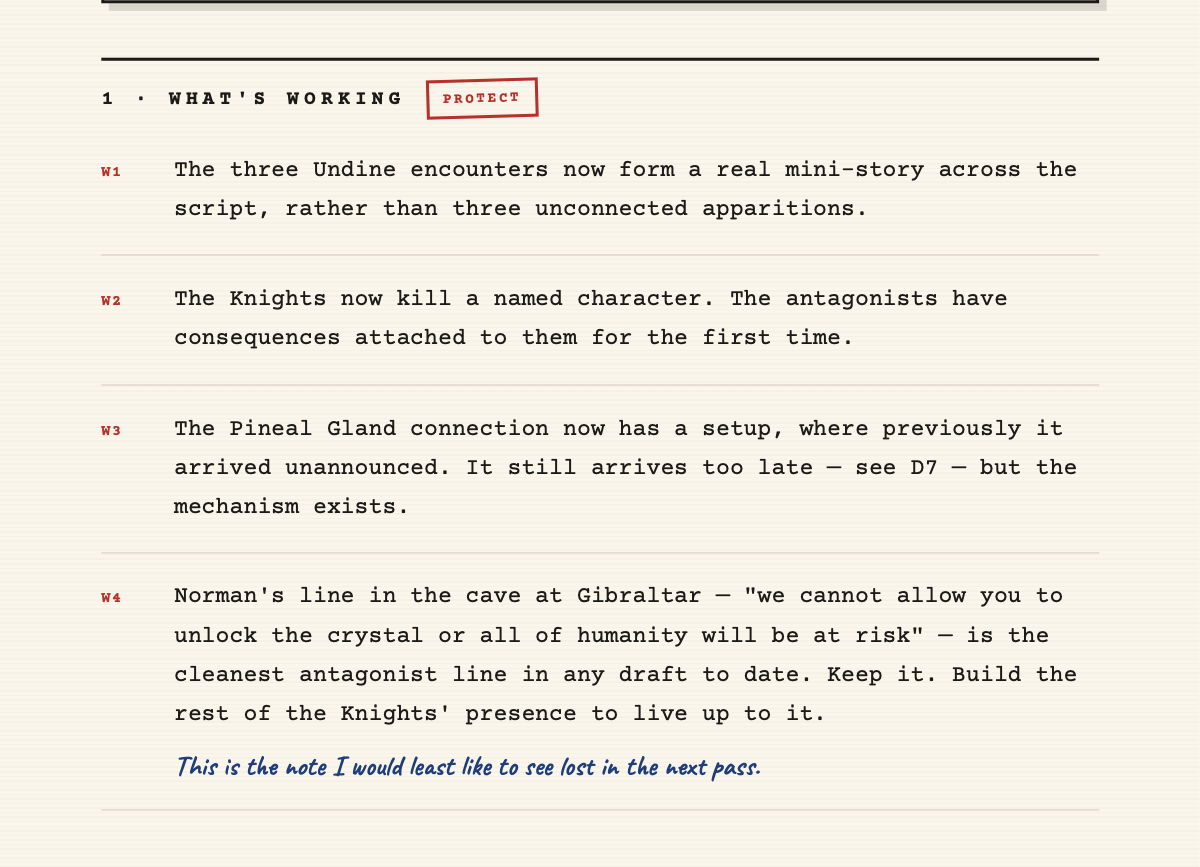
From a real report
The notes are dictated before they are typed
Section one is what the draft already gets right. The blue hand in the margin is Karel’s commentary, dictated while reading.
The Story Department family
Not ready for notes yet?
Keep learning from our sister sites.

Post your logline, get peer reviews, play the Daily Challenge, and run the Logline Medic.
Visit Logline It →
Screenwriting articles going back to 2006: structure, character, pitching, and the business of getting made.
Read the articles →
Bolster your future against AI and strengthen your voice with the Immersion courses.
Browse the courses →